
July
July is often described as a season of abundance. Meadows lean heavy with grasses and wildflowers, orchards carry the promise of autumn fruit, and garden borders spill over paths in waves of colour. At this time of year, it is easy to look at a beautiful landscape and imagine that it has arrived at this moment naturally, as though all this richness were inevitable.
Yet much of what we admire in July was not created this summer, or even last year. The flowering meadow, productive orchard and mature garden border are expressions of choices made long ago. They are the visible results of countless acts of care, many so small and gradual that they pass unnoticed. What we see today is the accumulated work of years, decades or even generations.
One of the privileges of my work is caring for gardens and landscapes that I did not create. I arrive as the latest custodian of a place with its own history: fruit trees planted by previous owners, old hedges maintained for decades, borders evolved through countless revisions. Even the soil beneath our feet carries the memory of past decisions.
This is particularly apparent in orchards. During winter I spend much of my time pruning apple trees, restoring neglected specimens or guiding young trees into a productive shape. It is satisfying work, but it rarely delivers immediate results. Earlier this year I began restoring an old apple tree that had become congested and unproductive. Standing beneath it now, watching sunlight reach parts of the canopy shaded for years, I can see that it is carrying one of its heaviest crops in recent memory.
Orchard management requires a willingness to think beyond the current season. You are not simply responding to what a tree is today, but helping decide what it may become.
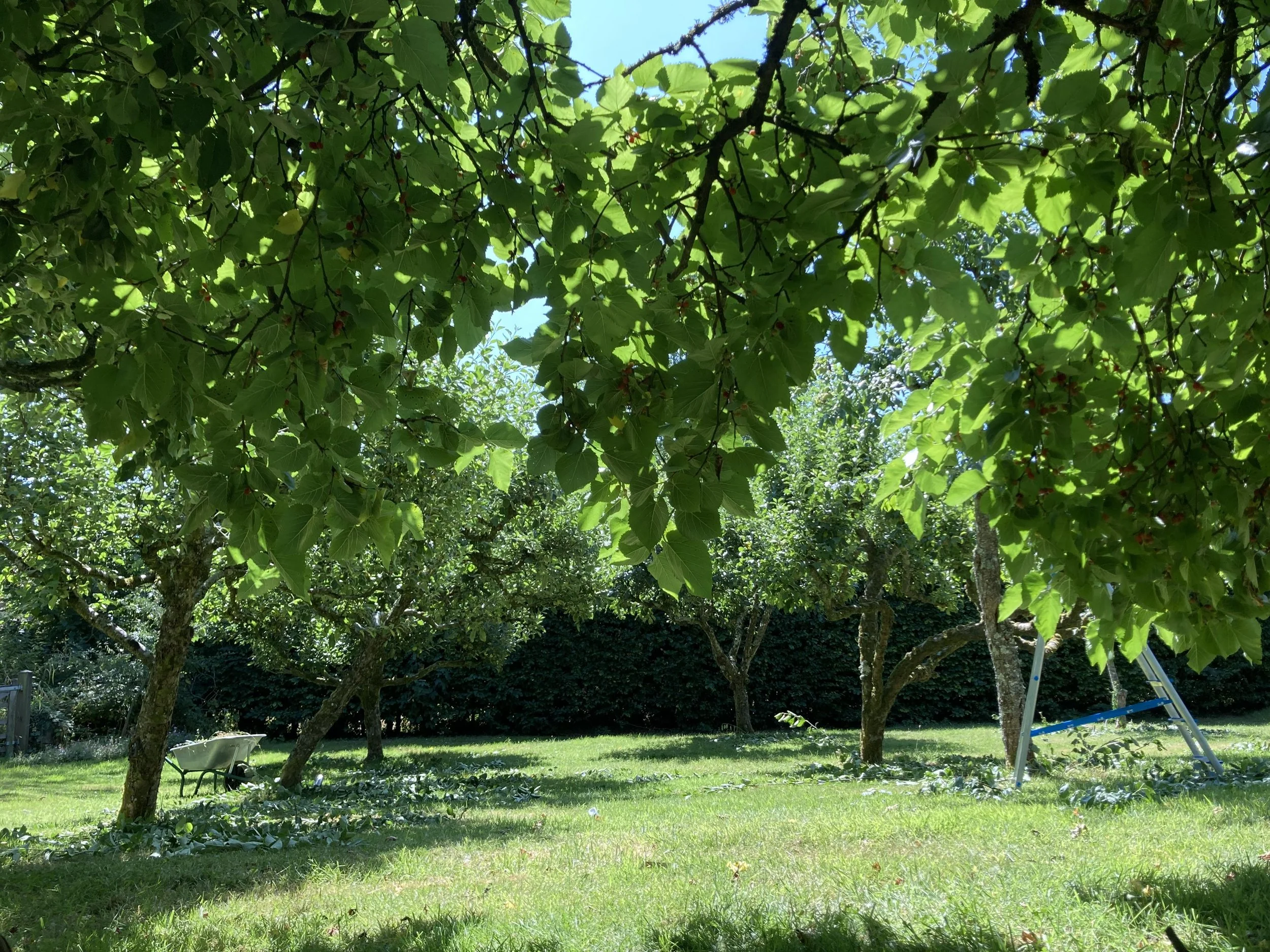
Orchard restoration is an exercise in patience: each careful cut helps shape the harvests of future seasons
The same is true of garden borders. The most beautiful were not created in a single season, but evolved through years of planting, editing and refinement. A shrub moved to a better position, a self-seeded foxglove allowed to remain, a perennial divided and replanted, a young tree given room to develop: each decision may seem insignificant on its own. Together, they shape the character of a place.
I often think that one of the biggest misconceptions about ecological gardening is that it involves doing less. Certainly there are moments when restraint is important. Not every corner needs tidying; not every nettle must be removed. But creating landscapes that are both beautiful and ecologically rich often requires effort. The difference is that the effort supports natural processes rather than overriding them.
Across Wessex, many orchards, hedgerows and gardens are the product of generations of quiet care. Soil takes years to improve, trees to mature and ecosystems to develop, responding to weather, management and chance. Meaningful change is measured in seasons rather than days. Gardens are accumulations of time.
A gardener works across several timescales at once. While deadheading a border, they may be thinking about next year's display. While pruning a fruit tree, they may consider how it will look in five years. A newly planted tree's finest years may arrive long after they are gone.
This makes it harder to think of a garden as something we own in the ordinary sense. The old apple tree may have been planted by somebody long forgotten; the hedge laid by hands no longer there. We inherit these places, care for them for a while and eventually pass them on.
Gardens remind us that we are participants in much longer stories than our own. The landscapes we enjoy are gifts from those who cared for them before us. The decisions we make now will shape the experience of those who come after. Gardens persist because somebody continues to notice them, understand them and work with them.
Perhaps that is the true task of the gardener: not to finish a landscape, because landscapes are never finished, nor even to perfect it. Rather, it is to act as a temporary custodian, helping to guide a place through one small chapter of its much longer life. If we do that well, we leave behind something richer, more abundant and more alive than we found it.