
June
I was in my allotment last week, tying in peas, when it struck me that I was already behind. It had only been a few days since I’d last been there, but the growth was unmistakable. Broad beans hung heavy with pods, garlic scapes twisted and curled in every direction, and the inevitable bindweed had begun its quiet climb back through the beds despite my best efforts to keep it down.
A run of long, hot days followed by cooler, damper nights had pushed everything on at once. In April and May there is often a sense of anticipation - sowing, planting, waiting for things to get going. June is different. Growth is no longer something you’re coaxing into life. It’s already happening, whether you’re ready or not. The garden begins to feel less like something you’re making and more like something you’re joining.
The same shift plays out in ornamental gardens. Borders that felt spacious a few weeks ago begin to fill out. Plants lean, flop and press into one another. Foxgloves appear where they were never planted, threading themselves through more deliberate arrangements. Poppies rise unexpectedly, and nettles push up through the richest soil, telling their own story about what lies beneath.
There is abundance here, certainly, but not the neat abundance we imagine in winter when we draw up our plans. Growth overlaps. Plants compete. Everything seems a step ahead. Around this time each year, I usually accept that I am no longer in charge.
There is always another job waiting: another edge to define, another plant to stake, another bed to weed. However much time is given, the list continues to grow. And with that realisation, something begins to shift. The work becomes less about deciding what should happen, and more about noticing what already is.
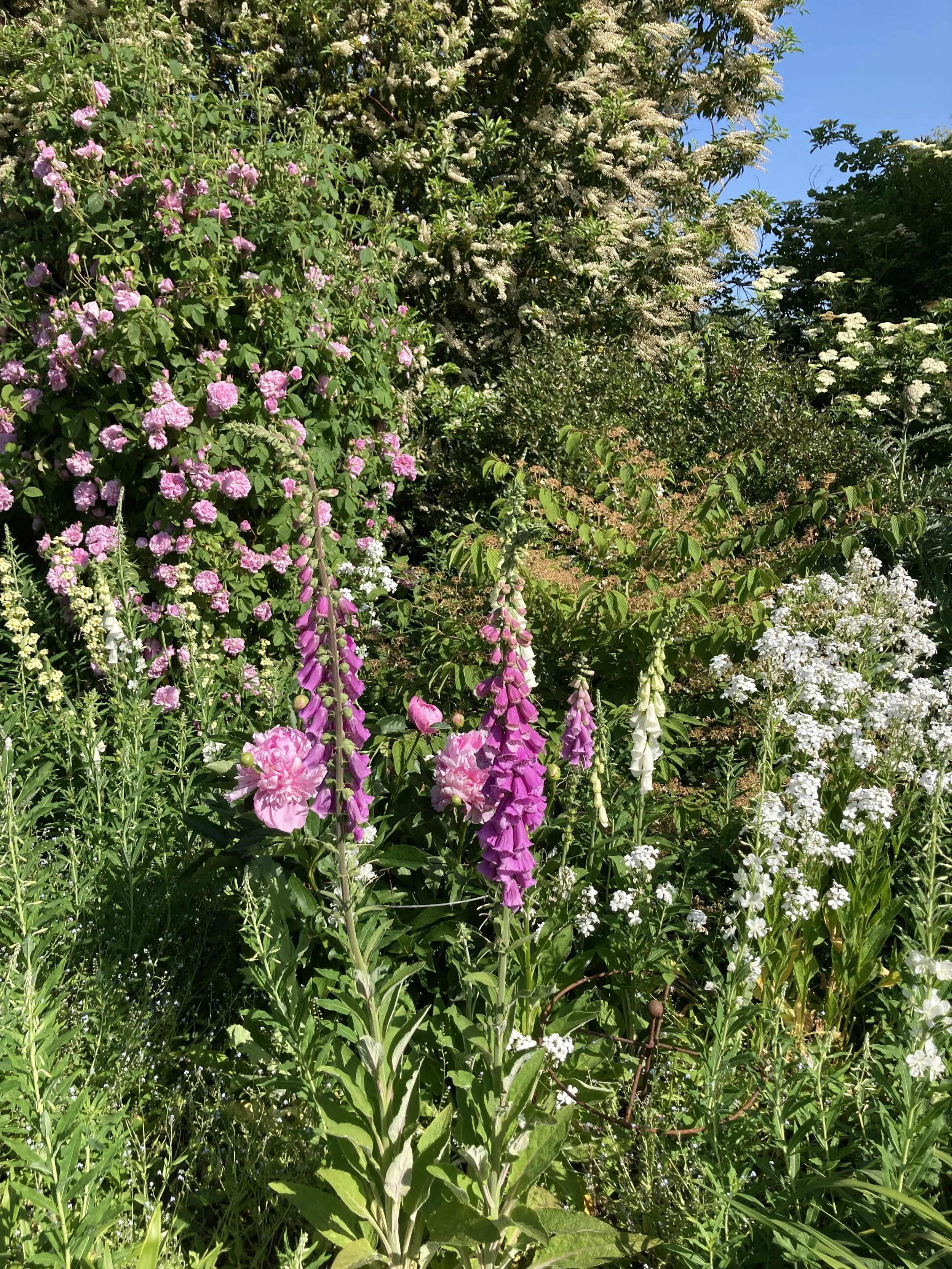
A cottage garden in full flight
That change begins with attention. The foxgloves that have seeded themselves uninvited into your carefully planned border are not simply wayward plants; they are being busily worked by bumblebees. Broad beans thick with aphids are soon patrolled by ladybirds moving methodically along the stems. A strip of grass left uncut for a week too long reveals buttercups, self-heal and red clover, drawing in a constant hum of pollinators. Even the hedge, slightly unkempt at the edges, begins to show itself - blackbirds slipping in and out, wrens making their territorial claims clear from within. The garden, in this state, is not simply growing. It is alive.
Seeing it this way makes it harder to treat every untidy corner as a problem to be solved. Some interventions begin to feel less necessary, or at least less urgent. Not everything needs to be cut back at once. Seedheads can be left standing. A strip of grass can be allowed to grow a little longer. Nettles, contained to one corner, can be tolerated rather than eradicated. These are small decisions, almost incidental, but over time they begin to change the character of a place. The garden becomes less of a display and more of a living community, carrying a greater richness of life within it.
This same sense of abundance begins to show itself in the kitchen garden. June is not yet the height of the harvest, but it brings the first steady returns. Early in the morning, or in the quiet light of evening, it becomes possible to move through the beds with a basket and gather what is ready: handfuls of mint and parsley, tender lettuces cut fresh for the day, the first strawberries warm from the sun, a young beetroot lifted from the soil, or carrots thinned while their tops are still bright and feathery. These are small harvests, easily overlooked, but they mark a turning point. The garden is no longer only something being worked on. It is beginning to give something back.
The same beds that provide food are alive with insects. Pollinators move between flowers, lacewings hunt among the leaves, and beneath the surface worms and countless unseen organisms continue their quiet work of building fertile soil. The conditions that allow our crops to thrive - healthy soil, consistent moisture and a diversity of plant life - are the same conditions that support the wider ecology of the garden. Food, habitat and beauty are not separate layers laid over one another. They are all expressions of the same living system.
By June, the garden is no longer waiting. It has already set itself in motion. The work now is not to hold everything still, but to notice what is unfolding and respond with care. The more time I spend gardening, the more I find myself letting go of the idea that a garden should be controlled. A living garden has a life of its own. Perhaps our role is simply to pay close enough attention that we learn to grow alongside it.