
April
In winter, it’s easy to believe that you’re in control. Beds are bare, structure is visible, and everything feels possible. You can stand in a garden and imagine anything working anywhere - a shrub moved here, a border reshaped there, a whole new scheme laid over the top. It feels like a blank canvas.
But by April, that illusion drops away. Growth begins, and with it comes clarity. Some areas surge into life, full of energy. Others lag behind. You begin to notice where the soil holds water, where it dries too quickly, where the light doesn’t quite reach as you thought it did in January. Plants you were confident about last year energy weakly, while others quietly take hold and expand. The garden is no longer hypothetical. It’s speaking to you now. And you must learn to listen.
We talk a lot about “right plant, right place,” but it’s often treated as something you decide in advance - a matter of choosing well, planting carefully, and getting it right the first time. In reality, April is when that idea is tested. The same plant can behave completely differently just a few feet apart. a border that looked balanced on paper might now feel uneven. Something you planted with intention struggles, while something you barely noticed last year begins to thrive.
This isn’t failure - it’s information. Planting without observation is guesswork. It’s only once growth begins that you start to see clearly what works, and what doesn’t. And from there, the work becomes more precise: moving plants while they’re still young enough to shift, dividing those that are thriving and repeating them elsewhere, rethinking combinations that aren’t quite holding together. The plan isn’t the final word, it’s just the beginning of a conversation.
Some of the clearest signals come from what appears without you planting it. At this time of year, seedlings begin to emerge in unexpected places. Bulbs push up through vegetable beds. Plants reappear where you didn’t consciously put them. It can feel untidy, even inconvenient - the instinct is often to clear, reset and impose order again. But these moments are worth paying attention to.
They tell you something about the character of the land. Certain plants favour certain conditions: moisture, fertility, soil structure, light. Nettles and docks suggest richness. Sparse, hesitant growth might point to compaction or lack of organic matter.Even the way water sits, or moves, begins to show itself now.
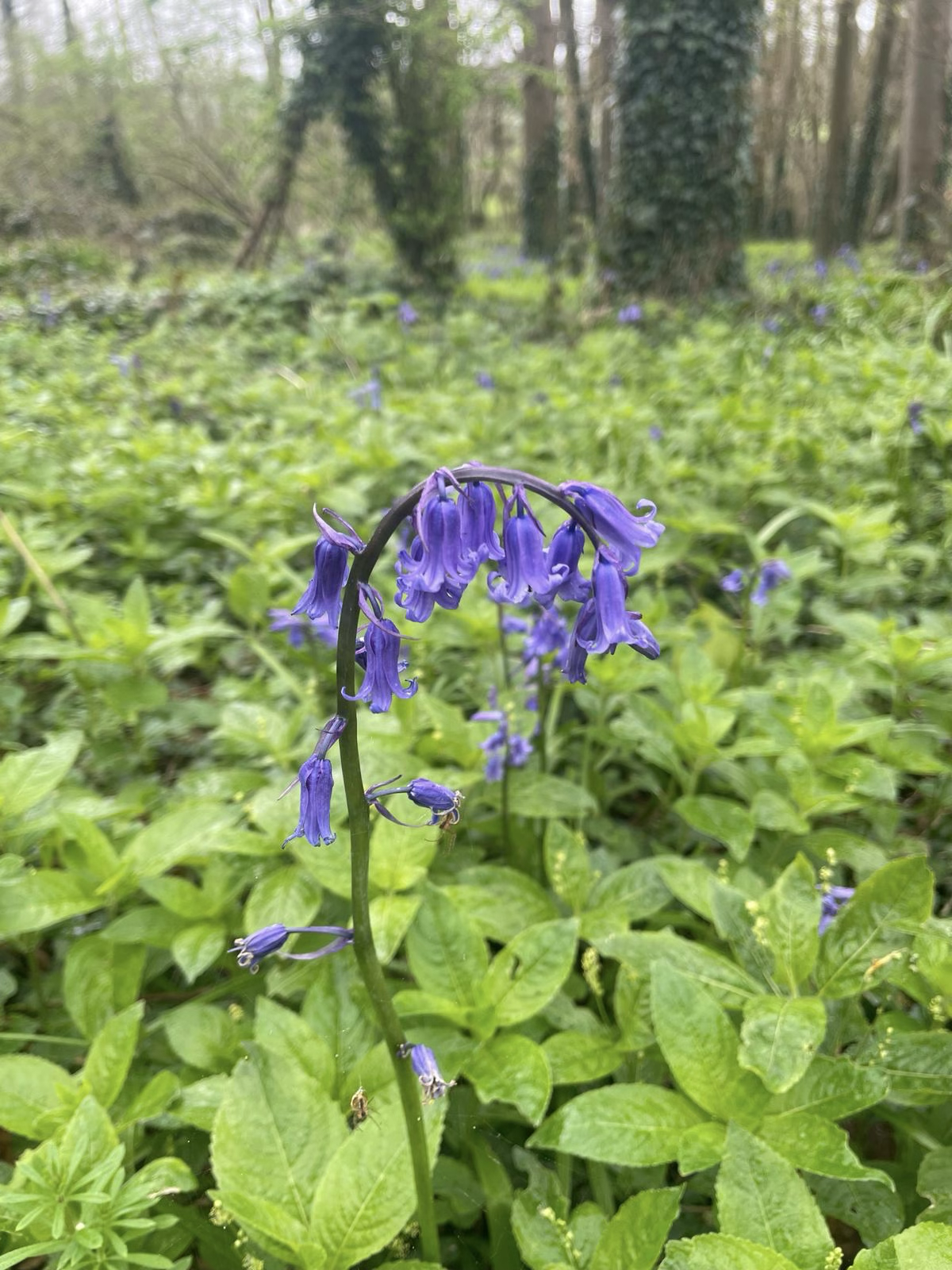
Bluebells and dog mercury offer a clue to the history of the land beneath your feet
This isn’t just about plants either. It’s about reading the landscape as a whole - where frost lingers, where growth starts earlier, where the ground warms slowly or quickly. If you learn to read it, the garden explains itself.
But none of this means doing nothing. There’s a tendency, when talking about working with nature, to slip into passivity - as if the most respectful approach is simply to step back and let things happen. But good gardening is active. It involves decisions, intentions and directions. In short, stewardship. The difference lies in how you make those decisions.
Rather than imposing a fixed idea onto land, you respond to what you’re shown. You improve the soil where it needs it, gradually building fertility with compost and mulch. You adjust planting to suit conditions rather than forcing it to succeed where it doesn’t want to. You move, divide, repeat, and refine. Over time these actions change the character of a place. But not instantly, and not by force.
A garden isn’t something that can be remade in one go, despite what an ambitious landscaper might tell you. Soil structure, balance, resilience - these develop slowly, through repeated, thoughtful work. Each season builds on the last. April shows you what has shifted, what has held, and what still needs attention. Time is also part of the material you’re working with. You are not creating a garden, or finishing it. You are are entering into it.
And in that process, something shifts. You’re no longer trying to control every outcome, but you’re not stepping back entirely either. You’re working in partnership - observing, responding, guiding. The garden leads, but you are still shaping it.
The more closely you pay attention, the clearer that relationship becomes. Patterns emerge. Decisions become simpler. The work becomes less about forcing results, and more about aligning with what is already there. The garden tells you where things belong - if you’re paying attention.